About
A scholar working inside the system he studies.
I research food systems policy at UT Austin and spend the rest of my week in operations, strategy, and community work at Casa de Luz. The two halves aren't separate jobs — they're the same question asked in two registers.
Who I am
Humanities Honors, UT Austin
I'm a Humanities Honors scholar at the University of Texas at Austin, finishing a B.A. in Urban Studies in Spring 2027. The Humanities Honors Program lets a student design an interdisciplinary major around a single guiding question. Mine is about food: how it is grown, moved, funded, served, and understood — and what that does to the health of a civilisation.
I carry a 4.0 with University Honors every semester, Cum Laude Ampla et Magna and the Dean's Honor List, and in March 2026 I was named a Distinguished College Scholar — the top 4% of the College of Liberal Arts. My honors thesis, advised by Mark Budolfson, is titled Neotraditional Food Systems: A Framework for Global Food System Transformation.
- B.A. Urban Studies, 2027
- 4.0 GPA
- Distinguished College Scholar
- Thesis defence Spring 2027
What I'm doing
Places and communities
The places that shape my work — and the different versions of health, food, and community they make possible.
-
2024 — present
Casa de Luz
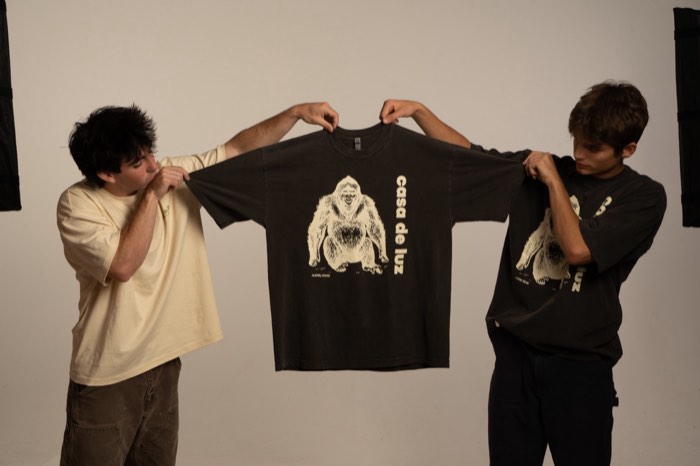
Casa de Luz is a mixed-use wellness village in Austin organized around a whole-food, plant-based dining hall. Food, gardens, education, movement, and gathering share one place rather than operating as separate services. Founded by my father, Eduardo Longoria, it is the community I grew up inside and the working model at the center of my research. I now serve on its management team in operations and strategy.
-
2024 — present
Casa de Luz Foundation
The Casa de Luz Foundation is a 501(c)(3) created to make sustainable, communal dining legible as urban wellness infrastructure — the kind of institution a city can support intentionally. Its work connects the lived model at Casa de Luz with Austin's broader food planning and public-health priorities. I serve as co-director.
-
2024 — present
Sweatcity ATX
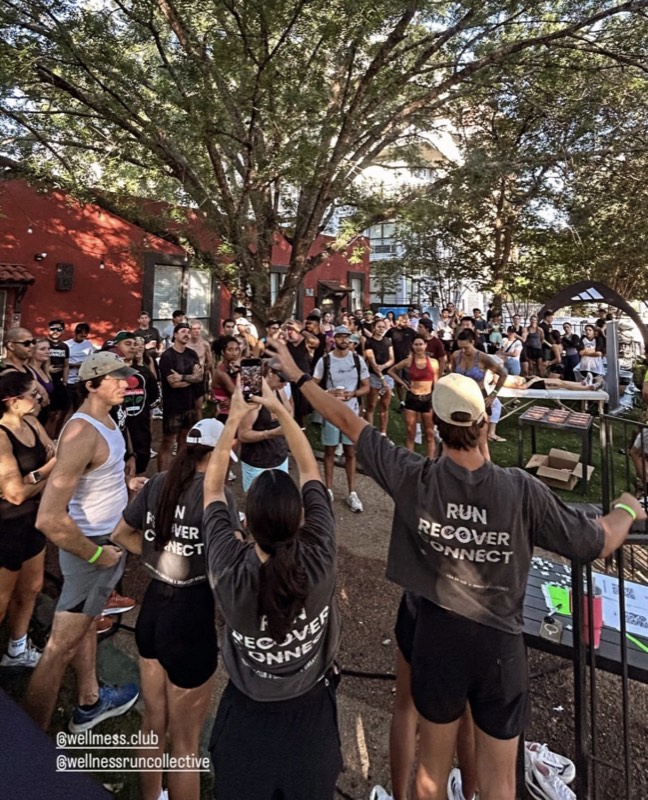
Sweatcity ATX is a contrast studio at Casa de Luz. Sweatcity Run Club lives within that larger community rather than standing as a separate organization. The studio brings another dimension of wellness into a place already shaped by food, gardens, and gathering. I am a co-founder.
-
2024 — present
Allied Scholars for Animal Protection at UT Austin
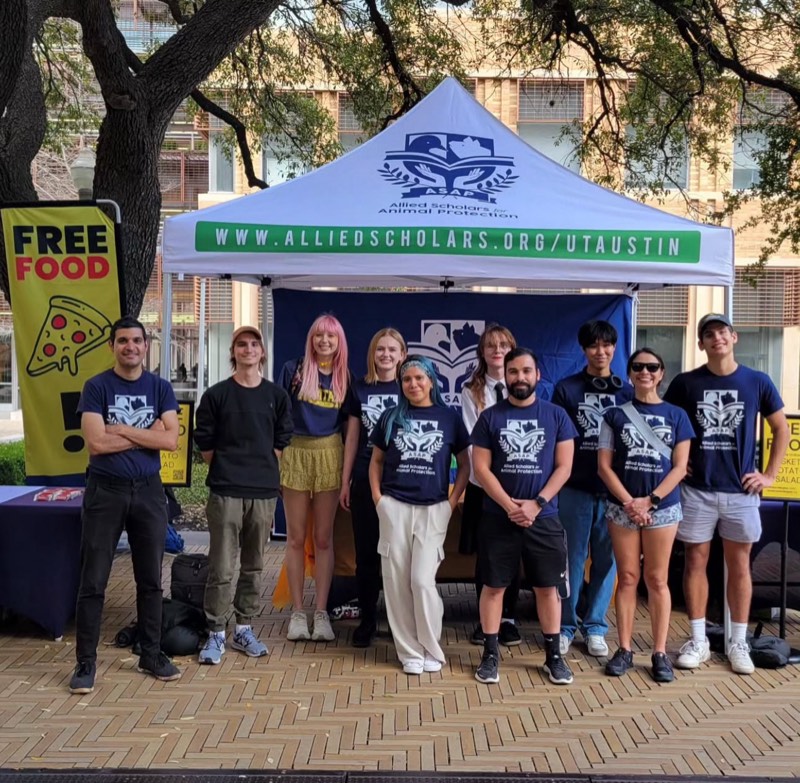
ASAP is a student community working at the intersection of food justice, animal welfare, education, and campus dining policy. It creates a place for students to learn together while engaging directly with the institutional food system around them. I serve as vice president of the UT Austin chapter.
-
Current
City of Austin Food Department
The Food Department is where Austin's food plan meets the practical machinery of municipal government: budgets, programs, procurement, and public-health priorities. It makes food visible as a city responsibility rather than a collection of private choices. I work there as an intern.
Why this matters
The argument, in four moves
-
1
Food systems are broken.
Roughly a billion people are undernourished. Billions more are sick from diet-related disease. Agriculture already grows about twice the calories humanity needs — the system isn't failing at its goal, it's succeeding at the wrong one.
-
2
A working alternative already exists.
Whole-food, plant-forward eating organised around community and place. It isn't speculative or novel; it's how most people ate for most of history, and it can be run at modern scale.
-
3
Institutions are the barrier — not technology.
Subsidy structures, procurement rules, zoning, and the metrics we use to measure food access all hold the current system in place. Those barriers can be identified, quantified, and changed.
-
4
So the question has changed.
My work is to prove the model operationally, model it economically, and name the specific shifts that would make it the default. The question isn't “can this work?” any more. It's “why aren't we doing this, and what exactly would make it happen?”
Background
The rest of it
Before UT I studied at the University of Colorado Boulder as an honors student at the Leeds School of Business — a B.S.B.A. in Management, Social Responsibility & Sustainability with a minor in Environmental Studies, 3.97 GPA and Dean's List every semester. I led the six-person team that won the Omni Interlocken case competition on workplace environment and employee retention, first out of more than 125 teams.
I've been a classical guitarist since childhood and have performed for audiences of 500 or more. I think about music roughly the way I think about food: something communal that we industrialised, and that wants to be communal again.
I'm also a triathlete — I raced Ironman Texas in 2026, and before that ranked among the top ten junior cross-country mountain bikers in Texas. I've eaten a whole-food, plant-based diet my entire life. That isn't the argument, but it is a data point I trust.
- Urbanism
- Sustainable food systems
- Experiential wellness
- Environmental ethics
- Public health communication
- Intermediate Spanish
Want the short version on paper?
My résumé has the full record of roles, honors, and awards.