01
Urban design
Where food sits in a neighbourhood determines who can reach it on foot, who gathers, and what a street is for. Food belongs in the charter of walkable design — an argument I took to the Congress for the New Urbanism.
The framework
A framework for how communities organise around food, health, and sustainability — combining traditional whole-food practice, rooted in food sovereignty and community, with contemporary economies of scale.
ne·o·tra·di·tion·al food sys·tems
noun · framework · abbr. NFS
Traditional whole-food and plant-based practices, rooted in food sovereignty and community, combined with the contemporary global economies of scale. Novel as a framework despite being ancient in practice.
It is not a diet trend, a wellness brand, or a set of personal recommendations. Neotraditional food systems is a policy framework — about institutions, urban design, procurement, and systemic change. The unit of analysis is a city or an institution, not a plate.
The claim underneath it is specific: the reason this model isn't the default has nothing to do with technological or biophysical limits. It's that institutions, politics, subsidy structures, and incentives are all lined up against it. Those barriers can be identified, quantified, and overcome.
Why it matters
Food systems shape health, community, economy, environment, and the physical form of cities. The current arrangement is extractive and disconnected — and it produces malnutrition and chronic disease at the same time, from the same supply.
Sources: Ritchie 2024; FAO, State of Food and Agriculture 2024; USDA Census of Agriculture 2022; De Amicis et al. 2022.
How it works in practice
Frameworks are cheap. What makes this one worth arguing about is that a version of it has been running continuously in central Austin for decades — and I have spent my life inside it.
Casa de Luz Village, 1701 Toomey Road, Austin, Texas 78704. A mixed-use wellness community organised around a whole-food, plant-based dining hall serving breakfast, lunch, and dinner daily. Around the dining hall: gardens and courtyards, event spaces, a meditation lounge, a juice and elixir bar, healers and practitioners, classes and coworking, and tenants including Sweatcity ATX's sauna and cold plunge.
None of those are amenities bolted onto a restaurant. They are what happens when food is treated as the organising principle of a place rather than a product sold inside it.
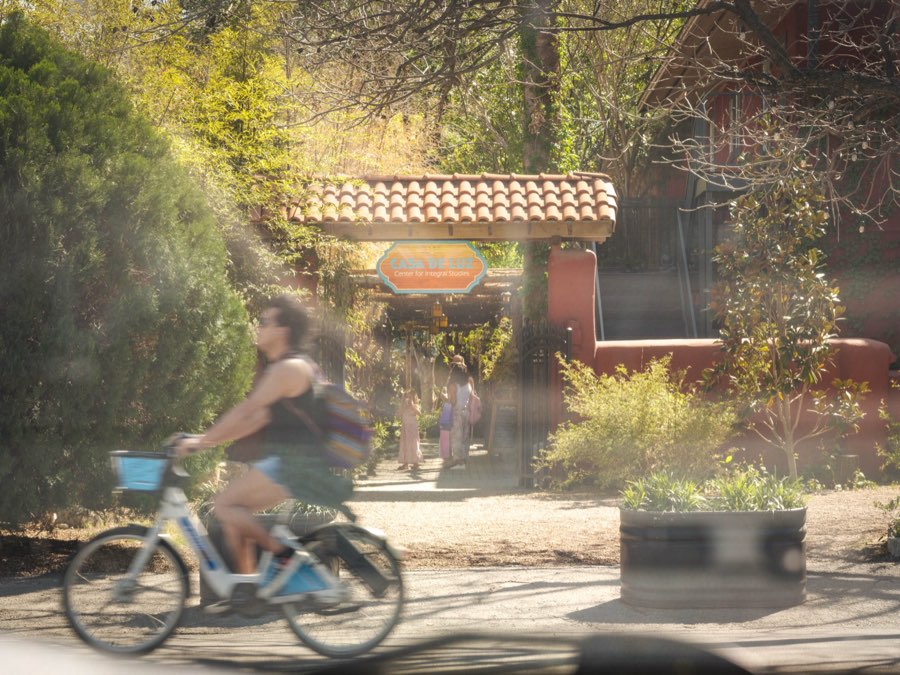
The site was a screen-printing yard — asphalt, chain-link, parked cars, no reason to walk there. The same parcel now holds dense planting, a pedestrian spine, gathering space, and three meals a day of real food. Nothing about the land changed. What changed was what it was for.
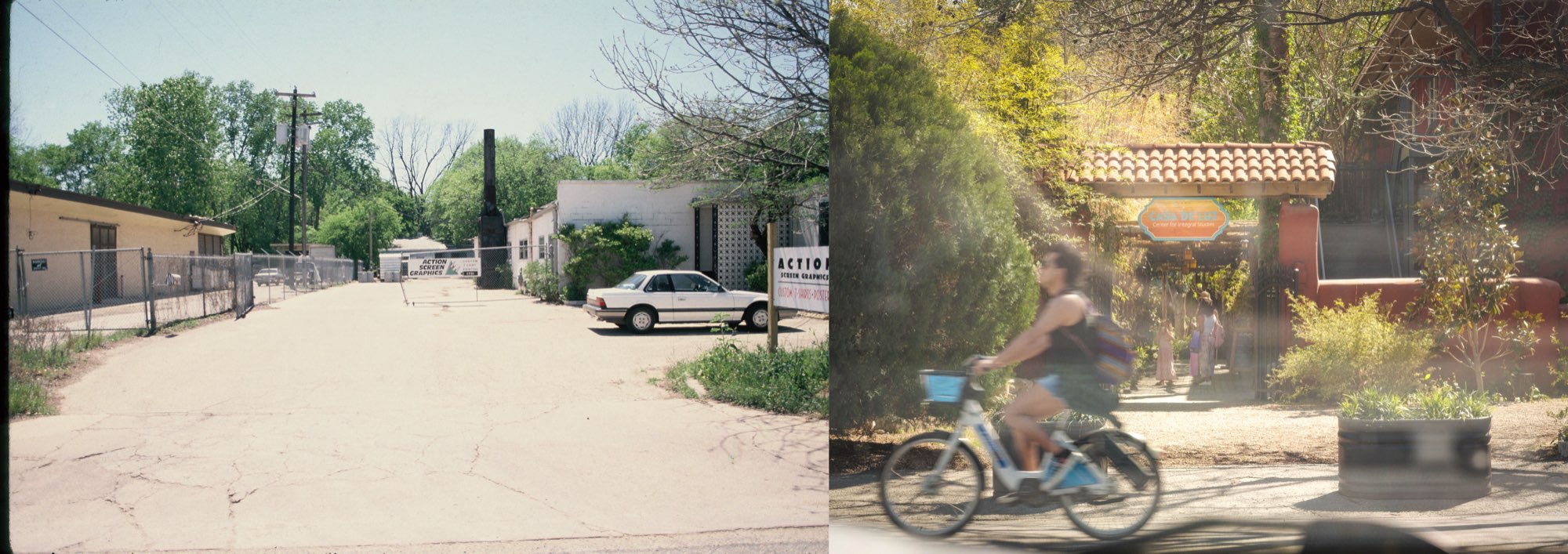
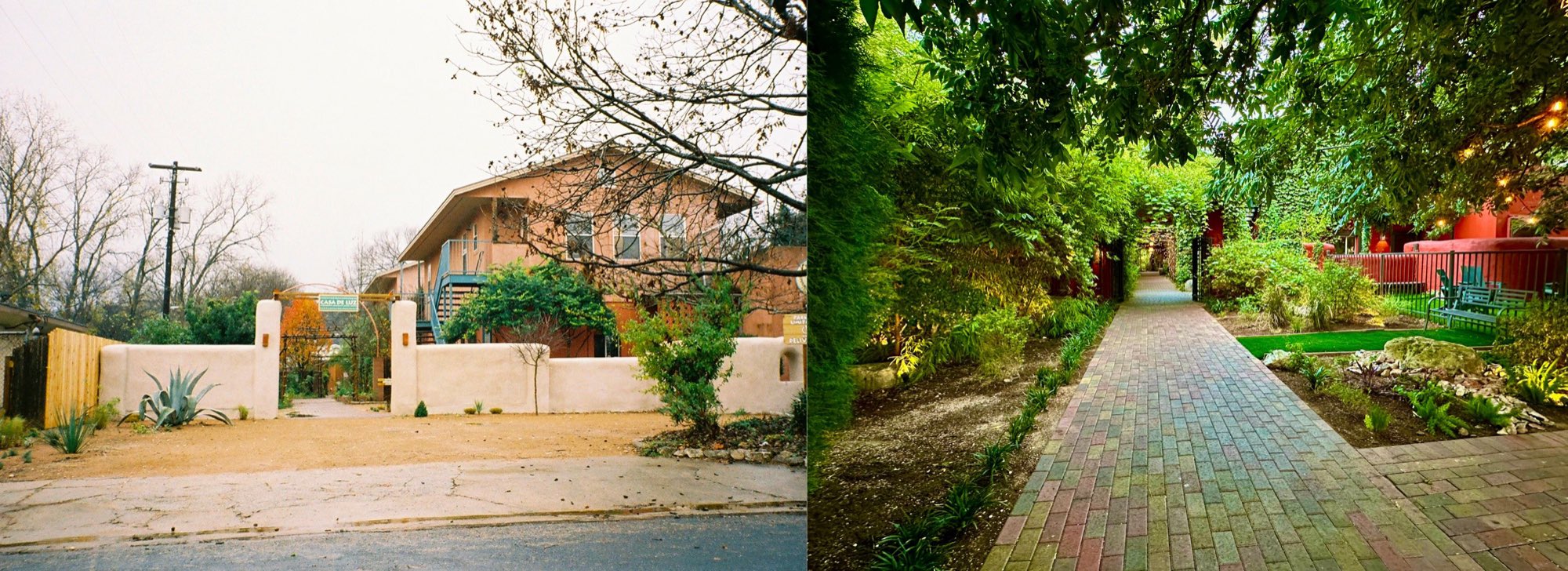
Then underused industrial parcel, car-oriented, no food access Now dense, walkable, community-rooted, three meals a day
“When diet is wrong, medicine is of no use. When diet is correct, medicine is of no need.”Ayurvedic proverb — painted above the door at Casa de Luz
The scope
Casa de Luz is the proof of concept, not the product. The framework applies wherever an institution decides what people eat — which is nearly everywhere.
01
Where food sits in a neighbourhood determines who can reach it on foot, who gathers, and what a street is for. Food belongs in the charter of walkable design — an argument I took to the Congress for the New Urbanism.
02
Cities already fund food outcomes — through health spending, land use, and permitting. The question is whether they do it deliberately. That's the case I'm building at the City of Austin Food Department.
03
Schools, hospitals, and agencies buy food at enormous scale under rules written for surplus absorption rather than health. Procurement reform is the fastest lever available and the least discussed.
04
A shared table does something a nutrition label cannot. Any model that ignores belonging will be adopted by the people who were already going to be fine, and by nobody else.
The research behind it
The academic foundation runs across food history, urban studies, environmental ethics, public health, and policy analysis. Three lines of evidence carry the argument:
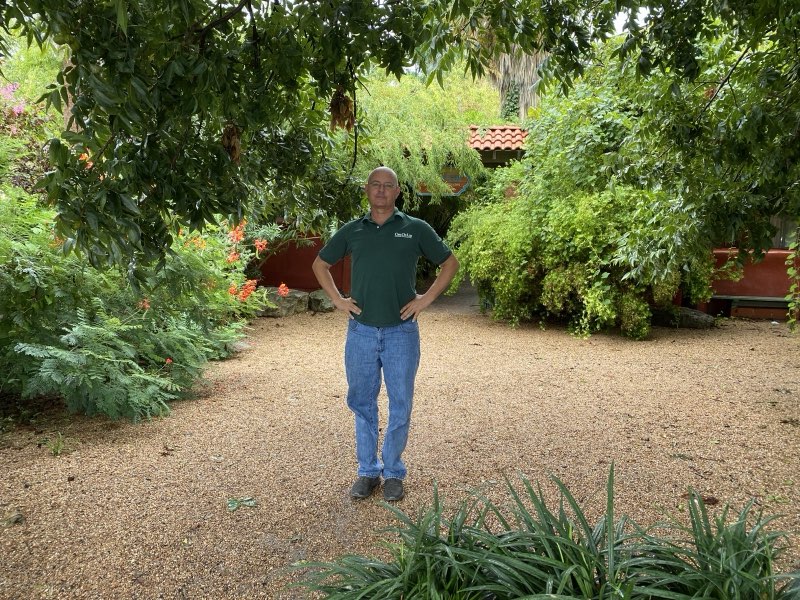
If neotraditional food systems are viable, the question isn't “can we do this?” any more. It's “why aren't we doing this?” and “what specific shifts make it happen?” Gabriel Longoria — thesis proposal, 2026
If you're a researcher, a policymaker, a funder, or someone trying to make this work in your own city — I'd like to hear about it.